Air ducts inside a slab foundation are repaired in one of three ways: the old runs are abandoned and new ducts run overhead through the attic, the channels are cleaned, dried and relined, or a broken section is cut out of the concrete and replaced. How the slab itself is fixed is in our concrete slab foundation repair guide. Which duct repair fits depends on the duct material, whether water gets in, and whether the slab is still moving. Below: the signs, the options side by side, what you can check yourself, and when the job belongs to an HVAC or foundation contractor.
How do you know the air ducts in your slab are damaged?
The usual signs are weak airflow from one or more floor registers, a damp or musty smell when the system starts, water or dirt you can see down a register, and rooms that never reach the set temperature. A duct that has cracked or collapsed under the concrete slab loses air into the soil and can draw moisture and debris back in. One weak register is worth a look. Several at once point to a run that has failed.
Check these before you call anyone:
- Airflow at each register. Hold a tissue over every floor vent with the fan running. Compare rooms on the same run.
- Standing water. Lift a register and shine a flashlight down. Water in a duct after heavy rain means the channel is open to the ground.
- Smell and humidity. A musty smell that gets stronger when the air comes on usually means the moisture is inside the system, not in the room.
- Higher bills. ENERGY STAR estimates that in a typical house 20 to 30 percent of the air moving through the ducts escapes through leaks, holes and bad connections.
What are in-slab air ducts made of, and why does it matter?
In-slab ducts in older Houston homes can be metal, plastic pipe, or a cement-based pipe, and some cement pipe from past decades contained asbestos. The material decides the repair. Metal rusts through when it sits wet, plastic can crack or flatten when the slab shifts, and cement pipe softens and crumbles when it stays damp. If you don't know what your ducts are made of, find out before anyone cuts, scrapes or drills them.
The asbestos question is the one that changes the plan. The US EPA's advice is plain: if you suspect a material contains asbestos, don't touch it, and leave sampling to a trained and accredited asbestos professional rather than taking a sample yourself. EPA also says material in good condition that won't be disturbed is best left alone. For an in-slab duct, that usually means a sealed-off, abandoned run is safer than one being broken out.
What are the ways to repair air ducts in a slab foundation?
There are four main options. Abandoning the in-slab runs and installing new ducts overhead avoids the concrete entirely. Relining keeps the old channels but puts a new sealed surface inside them. Cleaning and drying alone suits ducts that are intact but dirty. Breaking out the floor to replace a section is the last resort, used when only one short piece has failed and rerouting isn't practical.
| Method | How it works | When it fits | Drawback |
|---|---|---|---|
| Abandon and reroute | Floor registers sealed, new ducts run through the attic | Water gets in, suspect material, several failed runs | New vent positions; needs attic space |
| Reline | Run cleaned, dried and lined with a sealed sleeve or coating | Intact, dry runs reachable end to end | Fails if water keeps getting in |
| Clean and dry | Debris removed, moisture source fixed | Sound duct, dirt or a one-off flood | Returns if the moisture does |
| Break out and replace | Floor cut open over the failed section | One short, known failure | Breaks the floor and finish |
The EPA's guidance on duct cleaning is a useful filter for the relining and cleaning options. It says moisture should not be present in ducts at all, that sealants should never go over a wet liner or active mold, and that insulation that has been wet or moldy can't be cleaned well and should be replaced. If water is part of your problem, a coating alone is the wrong fix.
Can you repair collapsed air ducts in a slab foundation yourself?
You can check, clean and seal what you can reach, but you can't safely repair a collapsed duct buried in concrete yourself. Reaching it means cutting the slab, and the material may need testing first. A homeowner can find which runs have failed, keep water out, and seal the joints between registers and boots. Rerouting, relining and breaking out the floor are jobs for a contractor.
The parts that are safe to do yourself:
- Map the runs. Note which register belongs to which room and which ones are weak, wet or smelly.
- Turn the system off at a wet run. Blowing air over standing water spreads moisture and odor through the house.
- Remove loose debris at the opening only. Use a vacuum at the register. Stop if you see crumbling grey material and don't scrape it.
- Seal what you can see. Where the register boot meets the floor, use mastic sealant or metal foil tape. ENERGY STAR warns that ordinary duct tape doesn't last.
- Fix the outside water. Gutters, downspouts and soil sloping toward the house all feed water under a slab. See the guide to foundation drainage.
Where it stops: don't cut the slab, don't push a liner through an unidentified run, and don't spray chemicals into the ducts. EPA notes that no chemical biocides are currently registered for use in internally insulated duct systems.
Does slab movement or foundation repair damage in-slab ducts?
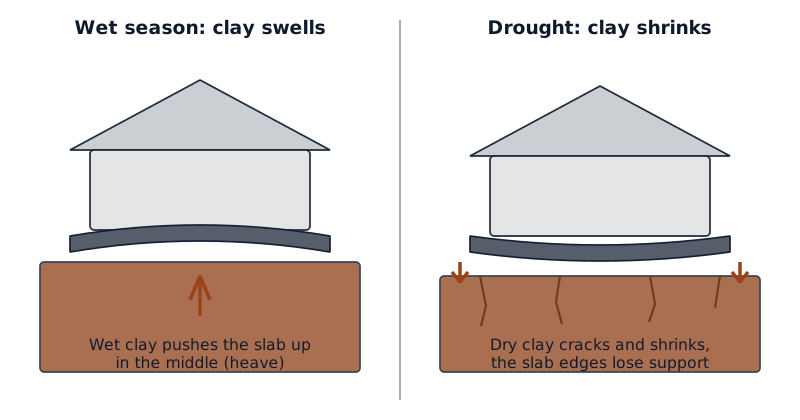
Yes, both can. Houston's clay shrinks and swells with the weather, and a duct cast into the concrete moves with the slab and can crack where the slab bends. Lifting a settled slab back toward level can also stress buried runs, the same way it stresses drain pipes. If you are planning foundation work, have the ducts checked before the lift so any damage can be dated correctly.
The USDA describes the local Lake Charles clay as cracking up to about 2 inches wide and a foot or more deep in dry spells. When rain returns, water runs down those cracks to the underside of the slab, and an open duct collects it.
Before a lift, ask the foundation contractor:
- Where the piers go in relation to the duct runs, and whether interior piers mean cutting the floor near one. A 2026 Houston guide puts interior work at about 15% extra.
- Who pays if a duct is cracked during the lift.
Leaking supply or drain lines can look like a duct problem too. The slab leak symptoms page shows how to tell them apart.
Who repairs in-slab air ducts in Houston, and what permits apply?
Duct work is HVAC work, so an air conditioning contractor usually does the rerouting or relining. In Texas, contractors who install, repair or maintain air conditioning systems for others need a license from the Texas Department of Licensing and Regulation. If the slab must be cut, lifted or repaired, a foundation contractor is involved too, and in the City of Houston foundation repair needs a building permit.
The state exemption for homeowners is narrow. Under 16 TAC 75.30, you can do air conditioning work in a building you own solely as your home, but the exemption covers you only, not friends or helpers. Anyone you pay should give you their TDLR license number, and you can check it on the TDLR website.
HVAC work and foundation work are permitted separately, so ask in writing who pulls each permit. Bellaire is its own city with its own permits. In neighborhoods that have flooded, such as Meyerland, have the ducts in a slab foundation checked after a flood, because a run that filled may hold silt and moisture long after the floor dries.
When the ducts and the slab are both part of the problem, send the details through our quote request page and we'll arrange a visit. A local foundation contractor checks how the slab has moved, notes where the duct runs are, and gives you a written price before any work starts.
Questions people ask
Can you just seal off the floor registers and stop using in-slab ducts?
Yes, and it's often the cleanest fix. Sealing the floor openings and running new ducts overhead takes the buried runs out of service, so they can't collect water or leak air into the soil. The old channels stay in the concrete undisturbed. The new system needs room in the attic and new vent positions, and the work should be done by a contractor holding a TDLR air conditioning license.
Is it safe to keep running the air if a slab duct has water in it?
It's better not to. EPA says moisture should not be present in ducts and that controlling moisture is the most effective way to stop mold growing in them. Running the fan over standing water pushes damp air and odor into every room on that run. Close that register, turn the system off if several runs are wet, and have the water source found first.
Do I need a foundation contractor or an HVAC contractor?
Often both, in that order. If the slab is cracked, sinking or heaving, the foundation has to be stable before new ducts go in, or they can fail the same way. An independent structural engineer's report helps when the cause isn't clear. If the slab is sound and only the ducts have failed, an HVAC contractor can usually handle it without foundation work.
Do homes on pier and beam have the same problem?
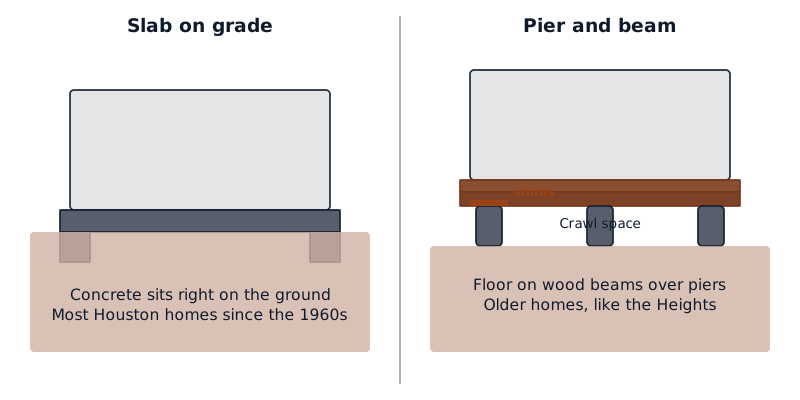
No. On a pier and beam house the ducts usually hang under the floor in the crawl space, where you can reach them to reseal, rehang and insulate. That is a very different job, covered in the guide to DIY pier and beam foundation repair.
The rest of our guides start from foundation repair in Houston.
Sources
- ENERGY STAR, duct sealing
- US EPA, should you have the air ducts in your home cleaned
- US EPA, protect your family from exposures to asbestos
- Texas Administrative Code, 16 TAC 75.30, air conditioning and refrigeration exemptions
- Texas Department of Licensing and Regulation, air conditioning and refrigeration contractors
- USDA NRCS, Lake Charles soil series description
- City of Houston weekly building permit report, July 2024
- Houston Press, guide to foundation repair in Houston (2026)
Last changed