A foundation inspection is a close look at how your house is sitting on the ground: floor levels measured room by room, cracks mapped inside and out, doors and windows checked, drainage and soil looked at, and a written opinion on whether the foundation is moving. In Houston it usually costs $300 to $1,000, with about $600 typical, according to a 2026 Houston Press guide. This page explains what the visit covers, who should do it, what drives the price, the signs that mean you should book one, and what to do with the report once you have it.
What does a foundation inspection involve?
A foundation inspection measures and records how level the house is and looks for the evidence of movement. The inspector walks the outside to check the slab edge or crawl space, the brick, the gutters and the grading. Inside, they take floor elevation readings across every room, note cracks in walls, ceilings and floors, and test doors and windows. You get a written report with findings and, often, a repair plan.
On a slab house, which is most Houston homes built since the 1960s, the inspector reads elevations from a fixed reference point and draws them as a floor plan with numbers. A pattern of low readings along one side, or a high middle, tells the story of how the slab has moved. The page on slab foundation repair explains what those patterns usually lead to.
On a pier-and-beam house, the inspector also looks underneath: the piers, the beams, any shims, rot or termite damage, and standing water in the crawl space. Older homes in the Houston Heights, where the city's design guidelines describe mostly wood houses on pier-and-beam foundations, need this crawl space check. If you own one, pier and beam foundation repair covers the work that often follows.
How much does a foundation inspection cost in Houston?
A foundation inspection in Houston costs about $300 to $1,000, and around $600 is typical, according to the Houston Press guide. A structural engineer's report runs about $500 to $1,000 nationally, and a soil report $500 to $3,000, according to This Old House. Some contractors offer a free inspection, which is usually tied to selling a repair. The price depends on who inspects and what they produce.
| Inspection type | Typical range | What you get |
|---|---|---|
| Foundation inspection, Houston | $300 to $1,000 | Elevation readings, crack notes, written findings |
| Structural engineer report | $500 to $1,000 | An engineer's opinion and repair plan, often needed for permits or a sale |
| Soil report | $500 to $3,000 | Soil borings and lab results, used for larger repairs |
| Free contractor inspection | $0 | Readings and a repair quote from the company that would do the work |
Things that push the price up: a large or two-story house, a crawl space that's hard to reach, a report needed by a lender or buyer on a deadline, and a follow-up visit after repairs. The full breakdown is on foundation inspection cost. These figures are a guide, and the written quote for your house sets the real price.
Who should inspect your foundation: home inspector, contractor or engineer?
It depends on what you need the answer for. A home inspector gives a general opinion during a sale. A foundation contractor measures the house and quotes a repair. A structural engineer gives an independent opinion and a repair plan that doesn't depend on selling the work. If you see real movement, or you're buying, the engineer's report is the one to trust most.
In Texas, home inspectors work to the Texas Real Estate Commission standards of practice. Those rules call the inspection a limited visual survey. For foundations, the inspector must give a written opinion on the foundation's performance and report the visible signs behind it, such as sloping floors, binding doors and cracked brick. The same rules say the inspector doesn't have to provide engineering services, and doesn't have to enter a crawl space with less than 18 inches of headroom. So a home inspection that flags foundation cracks is a starting point, not a diagnosis. House inspection foundation cracks covers what to do with that line in your report.
A contractor's inspection is useful for a price, but the company will also be the one selling the repair. An engineer has nothing to sell beyond the report. The steps for booking one are on how to get a structural engineer report, and structural engineer foundation inspection explains what the engineer looks at. A sensible order is the engineer's report first, then two or three repair quotes built on it.
What signs mean your house needs a foundation inspection?
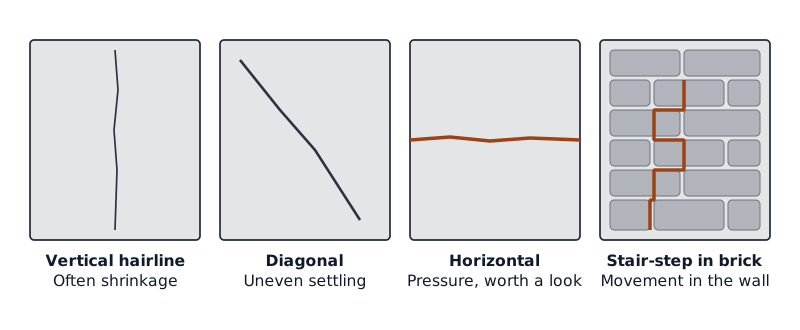
Book a foundation inspection when you see new or growing cracks in drywall or brick, doors or windows that start sticking or won't latch, floors that slope or feel springy, gaps where walls meet ceilings or trim, or cracks in the slab that you can catch a fingernail in. One sign on its own may be seasonal. Several together, or signs that keep getting worse, point to movement.
| Sign | Where to look | Why it matters |
|---|---|---|
| Stair-step cracks | Exterior brick, especially at corners | The wall below is moving |
| Doors binding or not latching | Interior doors, often at the top corner | The frame has gone out of square |
| Sloping floors | Rooms at the edges of the house | Part of the slab or beam has dropped or lifted |
| Gaps at trim or ceilings | Crown molding, baseboards, frieze boards | Framing is separating |
| Wide or uneven slab cracks | Garage floor, under flooring | Possible slab movement, not just shrinkage |
Dated photos and measured crack widths show the inspector whether something is growing.
Why do Houston houses need foundation inspections so often?
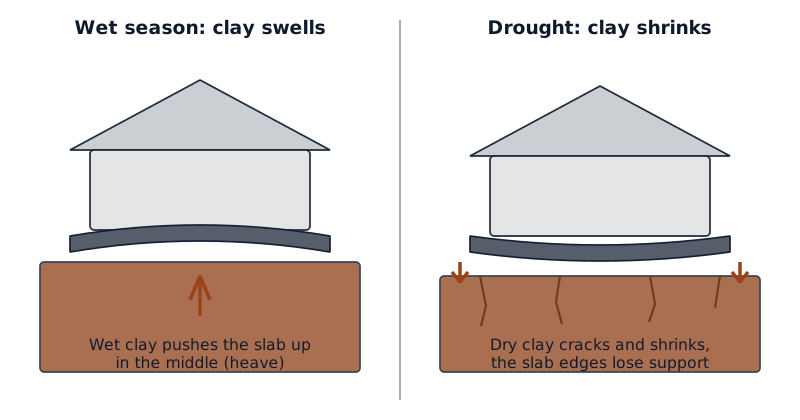
Houston houses move because the ground under them moves. Much of the area sits on heavy clays such as the Lake Charles series, which the USDA describes as 45 to 60% clay. In dry spells it cracks open up to 2 inches wide and a foot or more deep, then swells when rain returns. Land subsidence adds to it in some parts of the region.
The Harris-Galveston Subsidence District measures the fastest subsidence, over 3 cm a year, around Katy and Fulshear. Expansive clay is why the same house can look fine in spring and show fresh cracks after a dry summer. Keep the elevation readings from each visit so a later one can be compared with them.
What is on a foundation inspection checklist?
A good foundation inspection checklist covers the outside, the inside and the paperwork. Outside: grading, gutters and downspouts, trees close to the house, the slab edge or crawl space, and brick. Inside: floor elevations in every room, crack locations and widths, doors and windows. Paperwork: any earlier repair records, pier logs, permits and transferable repair terms, all collected before the visit.
Before the visit, it helps to:
- Clear access to the crawl space or the garage floor.
- List the cracks you've seen, with dates and photos.
- Find any earlier inspection or repair paperwork from the seller or previous owner.
- Note when the problems appear, for example after a dry spell or heavy rain.
After the visit, ask for the elevation map, the written findings and any recommended repair in writing. If repair is needed, the foundation repair cost guide shows the price ranges for each method. When you're ready, we'll arrange a visit from a local foundation contractor through the quote form, and you get the price in writing before any work starts.
Questions people ask
How long does a foundation inspection take?
A foundation inspection of a single-family home typically takes a couple of hours on site. A large or two-story house, or a pier-and-beam house where the inspector has to crawl underneath, takes longer. A structural engineer's written report can take several days after the visit, so allow for that if you're buying.
Do I need to be home for a foundation inspection?
You don't always need to be there, but it helps. The inspector needs access to every room and to the crawl space or garage, and you can point out the cracks and sticking doors you've noticed and when they started. If you're buying, the seller or agent usually arranges access, and you can join for the last part to hear the findings.
What tools are used for a foundation inspection?
The main tool is a level that reads floor heights across the house, usually a digital or water-based manometer level, sometimes a laser level. Inspectors also use crack gauges or rulers, a moisture meter, a flashlight and camera for the crawl space, and a tape measure. The elevation readings matter most, because they show the shape of the movement, not just its symptoms.
Is a commercial foundation inspection different from a residential one?
Yes. A commercial foundation inspection usually involves a structural engineer from the start, a larger survey of the building, and often soil testing and review of the original drawings. A residential foundation inspection is simpler: elevations, cracks, drainage and a written opinion. For a commercial building, ask for a structural engineer directly.
Should I get a foundation inspection before buying a house in Houston?
Yes, if the home inspection mentions foundation movement or you see cracks, sloping floors or sticking doors. A general home inspection in Texas is a limited visual survey and doesn't include engineering. A separate foundation inspection or engineer's report tells you whether repair is needed and roughly what it costs, while you can still negotiate the price.
Read on
- Costs
What a foundation inspection costs in Houston in 2026, from a $300 visit to a $1,000 engineer report, what changes the price and what you…
- House inspection foundation cracks
Your Houston home inspection flagged foundation cracks.
- Getting an engineer's report
How to get a structural engineer report on a Houston house: finding a Texas PE, checking the license, what to ask for, cost ($500 to…
- Structural engineer foundation repair
What a structural engineer does in a Houston foundation repair: the evaluation, the report, the sealed repair plan, the cost and the final…
More services are listed on foundation repair across Houston.
Sources
- Houston Press, guide to foundation repair in Houston (2026)
- This Old House, foundation repair cost guide (October 2026)
- Texas Real Estate Commission standards of practice, 22 TAC 535.227 (general provisions)
- Texas Real Estate Commission standards of practice, 22 TAC 535.228 (structural systems)
- USDA NRCS, Lake Charles soil series description
- Harris-Galveston Subsidence District, 2025 annual groundwater report summary
- Houston Heights design guidelines, City of Houston Planning
Last changed