When a house inspection notes foundation cracks, it means the inspector saw visible signs that the foundation may be moving, not that they diagnosed a problem. In Texas a home inspection is, by rule, a limited visual survey, and the inspector isn't required to find the cause or predict what happens next. Your next step is a proper foundation inspection with floor elevations, ideally by a structural engineer, before your option period runs out. This guide sits under our foundation inspection in Houston page and goes deeper on one thing: reading the foundation section of the report you've been handed, deciding which crack notes matter, and what to do in the days you have left.
What does a home inspector check on the foundation during a house inspection?
A Texas home inspector has to put in writing an opinion of the foundation's performance, name the foundation type, and report visible signs of trouble such as sloping floors and doors that bind, sit out of square or won't latch. They also check grading, drainage and gutters around the house. They don't measure the whole slab with instruments, dig, or give an engineering opinion.
The rules come from the Texas Real Estate Commission standards of practice. The general section describes the inspection as "a limited visual survey and basic performance evaluation." It says the inspector doesn't have to determine the cause or source of a condition, and doesn't have to anticipate future performance. So a line like "evidence of movement noted" is an observation, not a verdict.
On the foundation itself, the inspector has to report deteriorated materials and exposed or damaged reinforcement as deficient. Around the house, they report drainage that isn't working, poor grade levels and faulty gutters and downspouts. They aren't required to give an exhaustive list of every sign of movement, so a short foundation note doesn't mean the house is fine.
How do you read the foundation section of a Texas inspection report?
Texas inspectors use the standard Property Inspection Report Form REI 7-6. Every item has boxes for inspected, not inspected, not present and deficient. Foundations sit under Structural Systems near the start. Look for three things there: the box ticked, the written performance opinion, and the list of observations underneath, which is where cracks, slopes and binding doors get named.
Here is how the common wording usually reads in practice:
| What the report says | What it usually means | What to do |
|---|---|---|
| Inspected, performing as intended | No signs the inspector judged significant on the day | Keep the report; nothing urgent |
| Inspected, signs of movement noted | Cracks or slopes seen, but the inspector didn't call it deficient | Photograph and measure the cracks; consider a foundation inspection |
| Deficient, further evaluation recommended | The inspector thinks the foundation isn't performing | Book a structural engineer before the option period ends |
| Not inspected (crawl space) | The inspector didn't go under the house | Ask why, and have someone inspect the crawl space |
That last row matters on older houses. The standards let an inspector stay out of a crawl space with less than 18 inches of headroom, or an access opening smaller than 24 by 18 inches. The report must say where the crawl space was viewed from, so check that line.
Which foundation cracks in an inspection report actually matter?
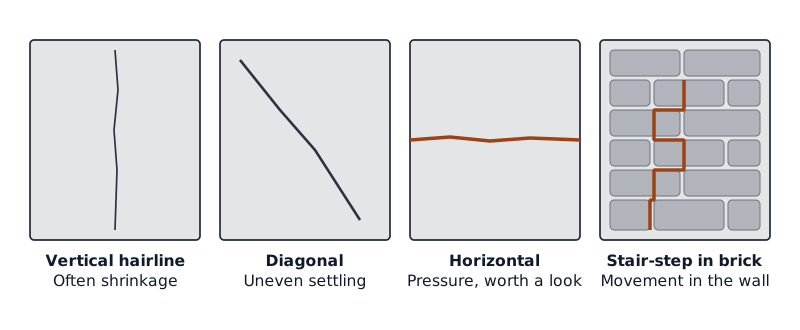
The cracks that matter are the ones that show the structure has moved: stair-step cracks in brick, cracks that are wider at one end than the other, cracks with one side higher than the other, and cracks that line up with sloping floors or sticking doors in the same part of the house. Thin, even hairline cracks in a slab or drywall on their own are often shrinkage.
Context changes everything. A single crack in the garage slab means little. The same crack plus a door that won't latch in the room beside it, and a gap at the crown molding above, points to one corner of the house moving. Read the report as a map, not a list.
Before you call anyone, do this:
- Mark each crack the report mentions on a rough floor plan.
- Photograph each one with a ruler or coin beside it, and date the photo.
- Note whether a fingernail catches in the crack, and whether the two sides are level.
- Open and close every door near the cracks and note any that rub.
Our guides on when to worry about foundation cracks and stair-step cracks in brick cover what each pattern tends to mean.
Is it normal settling or a foundation problem?
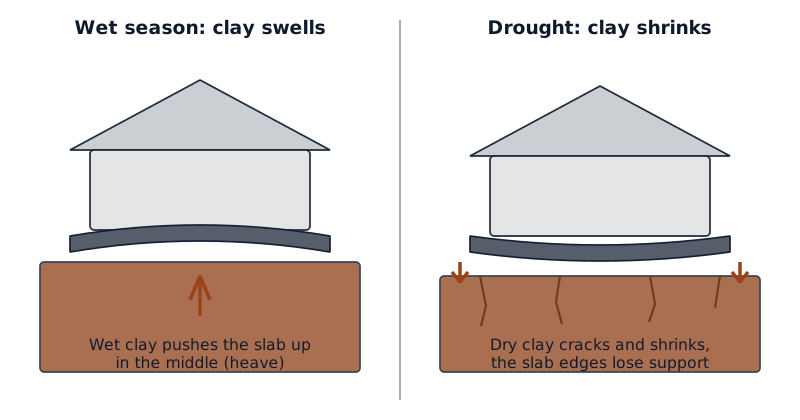
Some settling is normal in every house, and in Houston the ground itself moves with the seasons. Settling usually shows as fine, stable cracks that don't grow. A foundation problem shows as cracks that widen or come back after patching, floors that keep sloping further, and doors that get worse over months. One inspection visit can't tell the two apart.
Much of the Houston area sits on heavy clay. The USDA describes the Lake Charles series as 45 to 60% clay, cracking open half an inch to 2 inches wide at the surface in dry spells and closing when it's wet. That's expansive clay, and it's why a house inspected after a dry summer can show more cracks than the same house in spring. The page on foundation problems vs settling goes through the signs in detail. For a house you're buying, the honest answer usually needs measurements, not a judgment from photos.
How is a slab foundation inspection different from pier and beam?
A slab foundation inspection is done from above: the inspector looks at the slab edge outside, brick, flooring, the garage slab and doors, and a foundation specialist adds floor elevation readings. A pier and beam inspection also needs someone under the house, checking the piers, beams, shims, wood rot and water in the crawl space. The second type often turns up issues a slab inspection can't.
Most Houston homes built since the 1960s are concrete slab on grade, so on those the crack notes are about what shows on the surface. A concrete foundation inspection can't see under flooring, which is why elevation readings matter so much. Hairline cracks in a bare slab are common; see acceptable cracks in a concrete slab for what's usually fine.
On older pier and beam houses, a crack note on the inside walls often traces back to a single sunken pier or a rotted beam underneath. If the report says the crawl space wasn't entered, treat the foundation opinion as incomplete.
What should you do after a home inspection flags foundation problems?
If you're buying, act inside your option period. Book a structural engineer or a foundation specialist to take floor elevations and give a written opinion, ask the seller for any repair history, then get repair quotes based on that opinion. Use the result to ask for a repair, a lower price or a credit, or to walk away.
A practical order of work:
- Send the engineer the inspection report and your crack photos when you book, so the visit is focused.
- Ask the seller, through your agent, for earlier foundation reports, pier logs, permits and any transferable repair warranty.
- Once you have the engineer's opinion, get two or three repair quotes that follow it.
- Check whether earlier repairs had a permit. Inside the City of Houston, foundation repair is permitted work: it shows up as building permits in the city's weekly permit reports, so a past repair with no permit is a question worth asking.
How to negotiate with what you find is covered in buying a house with foundation issues. Booking the engineer is covered step by step in how to get a structural engineer report. If you already own the house, the same steps apply without the deadline.
What does a full foundation inspection report add?
A full foundation inspection report adds what the home inspection leaves out: a floor elevation map with readings in every room, crack locations and widths, a judgment on whether movement is active, the likely cause, and a repair recommendation. An engineer's report also stays independent of any repair sale, which matters when you're negotiating a price on the house.
This Old House puts a structural engineer's report at about $500 to $1,000 nationally, and warns that a hairline crack costing $250 to $800 to seal can grow into a $10,000 to $15,000 job when nobody deals with it. The foundation inspection cost page breaks down Houston prices. Read the report's repair section closely: a good one says how many piers, where, and why, so you can compare quotes like for like.
Want a second pair of eyes on the cracks? Send the report through our foundation quote request and we'll arrange for a local foundation contractor to look at the house and put a price in writing before anything is done.
Questions people ask
Does a home inspection always mention foundation cracks?
No. A Texas home inspector must give an opinion on how the foundation is performing and report visible signs of adverse performance, but the standards say they don't have to list every possible indicator. Cracks hidden behind furniture, flooring or fresh paint can be missed, and a recently patched crack may not show at all. If you see cracks the report doesn't mention, photograph them and raise them before the option period ends.
Can a home inspector tell me if the foundation needs repair?
Not with authority. Under the Texas standards a home inspector isn't required to provide engineering services, determine the cause of a condition or predict future performance. They can say the foundation appears not to be performing and recommend further evaluation. Whether it needs repair, and what kind, is a question for a structural engineer, with a foundation contractor then pricing the work.
Should I walk away if the inspection finds foundation issues?
Not automatically. Many Houston houses have had foundation movement, and some have been repaired well with paperwork to prove it. Walk away when the engineer finds active movement and the seller won't repair or reduce the price, when earlier repairs have no records or permits, or when the repair cost is beyond what you can absorb. Decide after the engineer's report, not after the inspection note.
Who pays for a foundation inspection when buying a house?
The buyer usually pays for the home inspection and any follow-up foundation inspection or engineer's report, because the buyer chooses the inspector and relies on the result. The cost of repairs found afterward is open to negotiation with the seller. Some buyers ask for a price reduction or credit that covers the engineer's fee as well as the repair.
How soon after an inspection should I get a foundation specialist out?
Straight away if you're buying. In Texas the option period is often short, and an engineer may need several days to visit and write a report. Book the visit the day you read the inspection report, send the report ahead, and ask when the written opinion will arrive so you have time to negotiate before the deadline.
The rest of our guides start from Houston foundation repair.
Sources
- Texas Real Estate Commission standards of practice, 22 TAC 535.227 (general provisions)
- Texas Real Estate Commission standards of practice, 22 TAC 535.228 (structural systems)
- Texas Real Estate Commission, standard inspection report form REI 7-6, 22 TAC 535.223
- USDA NRCS, Lake Charles soil series description
- This Old House, foundation repair cost guide (October 2026)
- City of Houston weekly building permit report, July 2024
Last changed