Most foundation work in Houston Heights is pier-and-beam work. The city's design guidelines for the neighborhood say most of its houses were built with wood siding on pier-and-beam foundations, and Craftsman bungalows were the favorite style from 1905 to 1925. So the usual Heights job is re-leveling a century-old floor frame, not lifting a modern slab. Two local things shape it: the three historic districts, and the White Oak Bayou flood record. This page covers both, what pushes the price up on an old bungalow, and how a visit works. For other parts of the metro, see the Houston areas page.
Why do so many Heights houses sit on pier and beam?
Because of when the neighborhood was built. Houston Heights was founded in 1891 as the earliest planned community in Texas, and most of its houses went up before slab-on-grade building took over in Houston. The city's guidelines describe the typical house as wood-sided on pier-and-beam, with Craftsman bungalows dominant from 1905 to 1925.
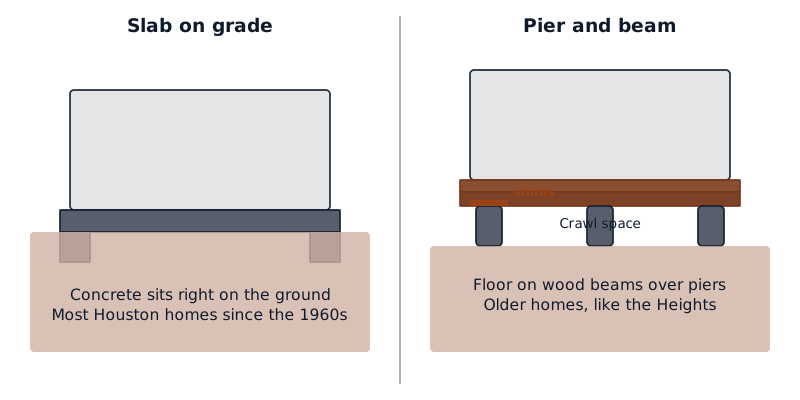
On a house that age, the trouble is rarely one failed pier. It's usually piers that have sunk unevenly, rotted or crushed wood shims, damp sills, and earlier repairs stacked on each other. A floor that slopes toward the middle of the house or a door that drags on a bungalow is the classic sign.
The fix is usually pier and beam foundation repair: resetting or adding piers, replacing shims, and sistering or swapping rotten beams, then leveling the floor in stages so plaster and old trim aren't cracked by a fast lift.
Does foundation work in a Heights historic district need city approval?
Sometimes. The Heights has three historic districts, and the city's guidelines say work there needs a Certificate of Appropriateness. The Houston Office of Preservation lists ordinary maintenance and repair, and changes not visible from the street, as exempt. Exterior changes visible from the street, demolition and relocation are regulated. Re-shimming under the floor usually stays out of sight; raising a house or changing its skirting may not.
The office reviews Certificates of Appropriateness for new construction, demolition and alterations to historic structures. Before anything visible changes, ask the office directly: its exemption sheet gives [email protected] and 832-393-6556.
That is separate from the building permit. The Heights is inside the City of Houston, and the city's own weekly permit reports list residential foundation repair permits, including shim-and-level work on block and base foundations. The contractor normally pulls that permit; ask to see it.
How did Harvey's White Oak Bayou flooding affect the Heights?
White Oak Bayou runs along the Heights, and in Hurricane Harvey its lower reach flooded to record levels from downtown up to Shepherd Drive, according to the Harris County Flood Control District. For a pier-and-beam house, standing water in the crawl space soaks the soil, the wood beams and the sills, and the problems can show up years later as soft spots and sagging floors.
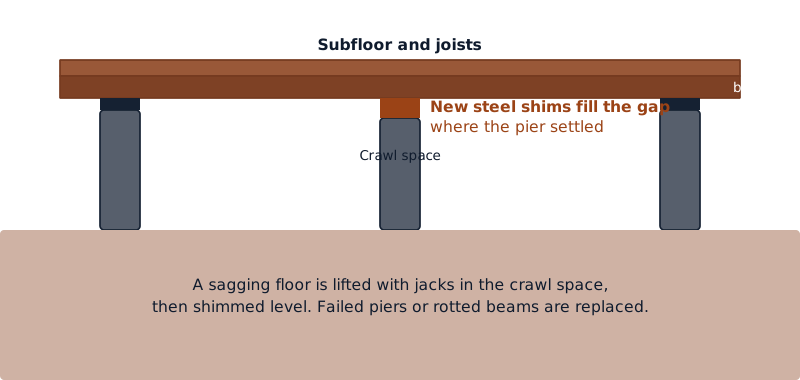
If your house took water in 2017, mention it when you book. Upstream, the same bayou rises near Jersey Village, where Harvey stayed below earlier storms, so the flood history along the bayou differs mile by mile.
Water that sits under a raised floor after rain is worth fixing on its own. Gutters that dump at the piers and low spots against the skirting keep that soil wet, so foundation drainage work is often part of a Heights job.
What pushes the price up on a Heights bungalow?
Access, wood condition and paperwork. Houston-wide, most foundation jobs run about $3,300 to $6,800, and This Old House notes that pier-and-beam repairs don't average the same as slab work. On an old Heights house, a low crawl space, a tight side yard or an added rear wing can make the piers harder to reach, and access problems add about 6 to 8% to pier costs.
Rotten beams or sills found once the skirting comes off add carpentry to the bill. A building permit typically adds $75 to $150. A structural engineer's report, which some owners want before buying or selling a historic house, runs about $500 to $1,000. The full breakdown sits on the foundation repair cost page. Every figure here is a guide; the written quote sets the real price.
How does a visit work for an older Heights home?
You tell us what you're seeing and where the house is, and we'll arrange a visit from a local foundation contractor. On a raised Heights house they'll take floor elevation readings, go under the house to check piers, shims and beams, and look at drainage around the lot. You get a written quote before any work starts.
A foundation inspection here typically costs $300 to $1,000 if you want one on its own. Have these ready: when the house was built or last re-leveled, any past repair paperwork, whether it flooded in 2017, and whether it's inside one of the historic districts.
Questions people ask
Can I re-level a Heights bungalow without historic district approval?
Often, yes. The Houston Office of Preservation lists ordinary maintenance and repair, and alterations not visible from the street, as exempt from regulation. Re-shimming and resetting piers under the floor usually fits that. Raising the house, changing its height from the street or replacing visible skirting is a different matter, so check with the office before that work starts.
Do I still need a city permit for foundation work in the Heights?
Yes. The Heights is inside the City of Houston, and the city's building permit reports show residential foundation repair permits, including shim-and-level jobs on block and base foundations. This is separate from any historic district review. Permits typically add $75 to $150 to the job. The contractor usually applies for it, so ask for the permit number.
Is a sloping floor in an old Heights house always a foundation problem?
Not always. Many houses here are about a century old, and many have settled a little over the decades. A slight, even slope that isn't changing may need nothing. A slope that's getting worse, new cracks in plaster, or doors that started sticking recently point to sinking piers or failing shims, and those are worth a visit.
Did Harvey flood homes along White Oak Bayou in the Heights?
The Harris County Flood Control District reports that lower White Oak Bayou hit record levels in Harvey, from downtown up to Shepherd Drive. The report tracks bayou levels, not individual streets, so your own house's history matters. If it took water, have the crawl space checked for soft wood and soil that has washed out or settled under the piers.
Every area we cover is listed on foundation repair houston.
Sources
- City of Houston Planning, Houston Heights historic district design guidelines
- Houston Office of Preservation, what is exempt from historic district regulation (2021)
- Houston Office of Preservation, historic preservation home page
- Harris County Flood Control District, immediate flood report for Hurricane Harvey
- City of Houston weekly building permit report, July 2024
- Houston Press, guide to foundation repair in Houston (2026)
- This Old House, foundation repair cost guide (October 2026)
Last changed