Hydraulic cement works on foundation cracks as a plug, not a repair. It sets in minutes, even against damp concrete, so it is good at filling a gap and stopping seeping moisture in a crack that has stopped moving. It adds no strength and does nothing about the soil or pressure that opened the crack. This Old House calls it typically cosmetic. For the full set of repair options, start with foundation crack repair in Houston. This page sticks to the material itself: which cracks suit it, how to set a plug that stays in, and why it pops out of a slab that is still shifting.
What is hydraulic cement, and can it fix foundation cracks?
Hydraulic cement is a cement that hardens by reacting with water rather than by drying out, which lets it set in wet conditions and even under water. The bags sold for crack work are a fast-setting version, made to stiffen within a few minutes. It can fill and seal a foundation crack, but it can't bond the two sides back together or stop the foundation from moving, so it is a patch.
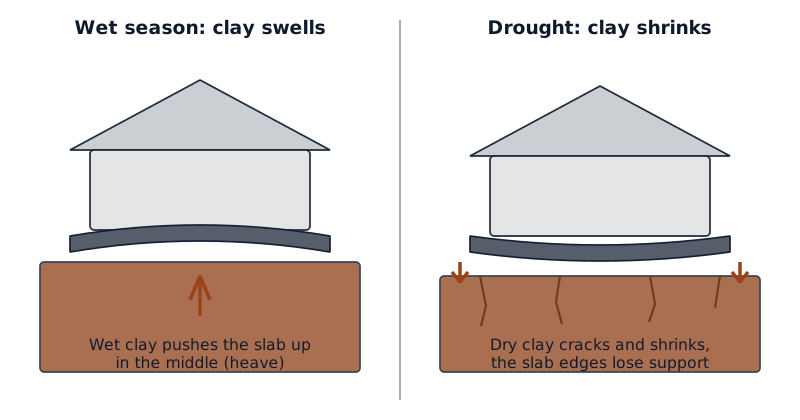
That distinction matters more than the product choice. A crack is a symptom. The Bureau of Reclamation's concrete repair guide says the cause and extent of cracking, including whether it is dormant or active, should be worked out before any repair is chosen. It also warns that most cracks are better left alone than repaired badly, since the wrong method usually just moves the crack into the patch or the concrete beside it.
Most hydraulic cement advice is written for leaking basement walls, which Houston homes almost never have. Here the crack is usually in the exposed edge of a slab, a garage floor, a concrete step, or a concrete pier under an older raised house, and it is far more often dry than leaking.
Which foundation cracks is hydraulic cement good for?
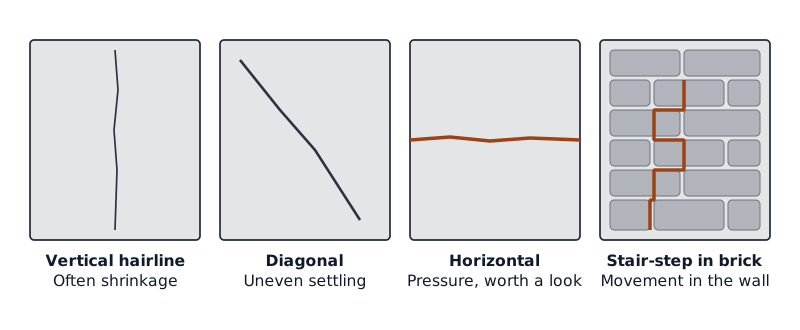
Hydraulic cement suits a crack that is wide enough to take a plug, has stopped growing, and either lets water in or looks bad enough that you want it filled. It is a poor choice for hairline cracks, which are too narrow to pack, and for any crack that is widening, offset or horizontal, because a rigid plug can't follow movement and simply cracks again.
| Crack | Hydraulic cement? | Better choice |
|---|---|---|
| Stable crack in a slab edge, wide enough to chisel out | Yes | Hydraulic cement or epoxy injection |
| Crack weeping water after heavy rain | Yes, as a stopgap | Polyurethane injection, plus fixing the drainage |
| Hairline cracks from curing | No, too narrow | Leave it, or a low-viscosity sealer |
| Crack that grows past pencil marks | No | Find the movement first |
| One side higher than the other | No | A foundation inspection |
| Horizontal cracks in a wall or beam | No | An engineer's or contractor's assessment |
To find out whether a crack is still active, mark each end in pencil with the date and photograph it beside a ruler. If it creeps past the marks over a few weeks, a plug is the wrong answer. The warning signs are set out on when foundation cracks are worth worrying about.
How do you apply hydraulic cement to a foundation crack?
You apply hydraulic cement by chiseling the crack out into a square or undercut groove, cleaning and wetting it, mixing a very small batch, and pressing it in by hand from the top down until it sets. One manufacturer's instructions call for a cavity at least 3/4 inch deep and 3/4 inch wide, and only as much mix as you can place in about three minutes.
- Check the crack is stable. A few weeks of pencil marks first.
- Protect yourself. Chiseling concrete makes dust. OSHA lists cutting, grinding and drilling concrete and mortar as sources of crystalline silica dust, which can cause silicosis. Wear eye protection, a dust mask and gloves.
- Cut the groove. With a hammer and cold chisel, open the crack to about 3/4 inch deep and wide. Cut the sides square or slightly wider at the back. The manufacturer's guidance is clear: no tapered V-shaped cut, because a V lets the plug push straight out.
- Clean and wet it. Take out loose pieces, scrub with a wire brush and water, and leave the groove damp but without standing water.
- Mix a small batch. Only what you can place in about three minutes. Work it in your gloved hands until it starts to stiffen and feel warm.
- Press it in. Start at the top of a vertical crack and push the cement in firmly, holding pressure for a few minutes until it sets. On a leak, hold it until the water stops.
- Finish and keep it damp. Smooth with a wet trowel and keep the patch moist for at least 15 minutes, longer in a dry Houston summer.
For narrow cracks on a slab surface or garage floor, the approach is different again; see filling cracks in a concrete slab.
Is hydraulic cement better than epoxy or polyurethane for foundation cracks?
Hydraulic cement is better only for a fast, cheap plug in a wider crack, especially one that is wet. Epoxy is better when the crack needs its strength back, because it bonds the concrete together. Polyurethane is better for stopping water through a crack that may still move slightly, because it stays flexible. None of the three lifts a slab or stops clay from moving underneath it.
| Hydraulic cement | Epoxy injection | Polyurethane injection | |
|---|---|---|---|
| What it does | Plugs and seals the surface | Rebonds the crack through its depth | Seals water through its depth |
| Sets | In minutes | Slower, cures in place | Quickly, as a foam |
| Handles movement | No, rigid | No, hard and brittle | Some, it flexes |
| Works on wet cracks | Yes | Only with special methods | Yes |
| Adds strength | No | Yes | Generally no |
| DIY friendly | Yes | Kits exist, skill matters | Mostly contractor work |
The Reclamation guide describes epoxy as curing hard and brittle so it can't take movement, and polyurethane as a flexible foam able to stretch 300 to 400% as a crack opens. How epoxy injection is carried out, step by step, is covered on epoxy injection for foundation cracks.
Why does hydraulic cement crack out of Houston foundations?
Hydraulic cement fails here mostly because the concrete around it keeps moving. Much of the Houston area sits on heavy clay, such as the Lake Charles series, which the USDA puts at 45 to 60% clay. In dry spells it opens cracks 1/2 to 2 inches wide in the ground, then swells again when rain returns. A rigid plug can't stretch with that.
The fix for that is upstream of the crack: water draining away from the house, even soil moisture through summer, and, if the slab has already settled, support under it. Foundation drainage is where most Houston repairs should start.
When should you stop and call a foundation contractor?
Stop and have the foundation looked at when the crack is wider than about 1/4 inch, keeps growing, has one edge higher than the other, runs horizontally, or comes back after patching. Do the same if you see sticking doors, sloping floors or new drywall cracks at the same time. Those are signs of movement, and serious movement is not something a bag of cement can fix.
A local foundation contractor will measure the floor levels and check the drainage before suggesting anything. If the answer is piers and leveling, that is structural work. Inside the City of Houston, foundation repair runs under a building permit, and the city's weekly permit reports list those permits every week.
A professional crack filling job costs about $250 to $800 nationally, according to This Old House. Houston figures for the bigger repairs are on foundation crack repair cost.
Questions people ask
How long does hydraulic cement take to set?
Fast-setting hydraulic cement stiffens in a few minutes, which is why you mix only as much as you can place in about three minutes. On a leak, you hold the plug in by hand until the water stops. It should be kept damp for at least 15 minutes after finishing. Check the bag for how long to wait before you coat or paint over it.
Can you use hydraulic cement on hairline cracks?
Not well. Hairline cracks are too narrow to pack a plug into. Most hairline cracks from concrete curing need no repair at all. If you want one sealed against moisture, a low-viscosity sealer or epoxy suits it far better than a cement plug.
Does hydraulic cement waterproof a foundation?
It stops water at the spot you patch, at least while the crack stays still. It is not waterproofing for the whole foundation. This Old House notes it may limit minor water entry but won't relieve the pressure behind a wall. On a Houston slab, grading and gutters that keep water away do far more than sealing one crack.
Is hydraulic cement the same as regular cement or mortar?
Not quite. Ordinary portland cement is also a hydraulic cement, since it hardens by reacting with water, but it sets slowly. The product sold as hydraulic cement for cracks is formulated to set in minutes, even when wet. Mortar is a cement and sand mix for laying brick and block. It is the right choice for repointing brick veneer joints, not for plugging a foundation crack.
Do I need a permit to patch a foundation crack with hydraulic cement?
A surface patch isn't the structural work the permit is aimed at, but check with your city if you are unsure. In the City of Houston, foundation repairs such as piering and leveling run under a building permit, and a buyer's inspector may ask for it when you sell. Other cities set their own rules.
For the wider picture, start with Houston foundation repair.
Sources
- This Old House, foundation cracks: what is normal and when to worry (April 2026)
- This Old House, foundation repair cost guide (October 2026)
- U.S. Bureau of Reclamation, Guide to Concrete Repair, second edition (2015)
- Published application instructions of a hydraulic water-stop cement manufacturer, checked November 2026
- OSHA, crystalline silica
- USDA NRCS, Lake Charles soil series description
- City of Houston weekly building permit report, July 2024
Last changed