To repair a cracked foundation, first work out whether the crack is just concrete shrinkage or a sign the house is moving. A thin, stable crack in a slab can be cleaned and sealed with an epoxy or polyurethane crack filler. A crack that keeps widening, runs with doors that stick, or has one side higher than the other means the soil under the house is shifting, and sealing it won't hold. That repair is piers, leveling and better drainage, done by a local foundation contractor. The full range of options is on our foundation crack repair page. Below you'll find how to judge a crack, how slab cracks get sealed, how to fix the drywall cracks that show up inside, and what happens if you wait.
How to tell if a foundation crack is structural?
A foundation crack is likely structural when it keeps growing, is wider at one end than the other, has one edge sitting higher than the other, or comes with other signs: doors and windows that jam, gaps where walls meet the ceiling, sloping floors or stair-step cracks in brick. A thin, even crack that hasn't changed in months is usually shrinkage, which is cosmetic.
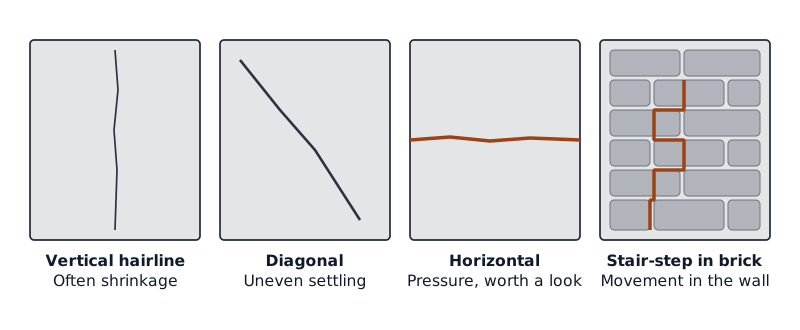
Most concrete develops hairline cracks as it cures and dries. They're normal and often never move again. The cracks that matter are the ones caused by pressure from below or the side, when soil swells, shrinks or settles unevenly.
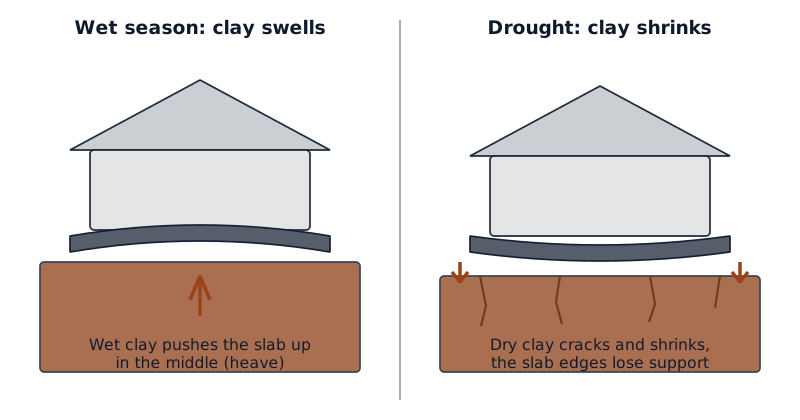
Houston gives that pressure plenty of chances. The USDA describes Lake Charles clay, common under southeast Texas homes, as 45 to 60% clay that splits open half an inch to two inches wide in dry spells. Beaumont clay east of the Trinity River behaves the same way. When rain returns, the clay swells and pushes back up on the slab.
A simple test helps: mark both ends of the crack with a pencil, date it, and photograph it next to a ruler. Check it again after a few weeks, especially across a change of season. If it has grown, it's moving. Direction tells you something too; our guide to vertical vs horizontal foundation cracks explains what each pattern usually means.
Much of the advice you'll find online is written for basement walls, where horizontal cracks come from soil and water pressure pushing the wall inward. Houston houses rarely have a basement. Here, cracks show up in the slab, the brick veneer, the beam of a pier-and-beam house and the drywall inside.
How to fix crack in concrete slab foundation?
To fix a stable crack in a concrete slab foundation, clean it out, let it dry, then fill it with a crack repair product made for concrete: a low-viscosity epoxy or a flexible polyurethane sealant. Epoxy bonds the two sides together; polyurethane stays flexible and blocks moisture. Neither fixes a slab that is still moving, so check the crack first.
Here is how a small slab crack is usually sealed:
- Expose it. Lift carpet, tile or wood flooring over the crack, or work on the exposed slab edge outside.
- Clean it. Use a wire brush and a vacuum to remove dust, loose concrete and old filler. Filler won't bond to dirt.
- Dry it. Most products need a dry crack. If it's damp, find out why before you fill it.
- Fill it. Follow the product's directions. Thin cracks often take an injection kit with surface ports; wider ones may need a patching compound.
- Watch it. Mark the ends of the repair and check it over the next few months. A new crack beside the old one means the slab is still moving.
The crack itself is a symptom. When a slab keeps cracking, the fix happens in the soil: a contractor installs piers under the sinking section and lifts it back toward level. That's covered in detail on slab foundation repair and foundation piers.
How do you fix drywall cracks caused by foundation movement?
Fix drywall cracks by cutting out loose material, bedding paper or mesh tape over the crack in joint compound, then adding thin coats, feathering each wider, sanding and painting. If the cracks came from a moving foundation, they'll reopen unless the movement stops first, so it pays to deal with the foundation before the drywall.
The same method works on walls, ceilings and seams:
- Wall cracks. Widen a fine crack slightly with a utility knife so the compound has something to grip. Tape it, then apply two or three coats.
- Seam cracks. A crack along a seam usually means the original tape has lifted. Cut away the loose tape, re-tape and re-coat.
- Ceiling cracks. These follow the joints between sheets. Paper tape bedded in compound tends to hold better on ceilings than a quick spackle fill, which often shrinks and shows again.
- Horizontal drywall cracks. Often these run along a seam or where wall meets ceiling. If they come with sticking doors or gaps at the trim, treat them as a sign to check the foundation.
Caulk and spackle alone suit only the finest cracks. They hide the line, but they don't bridge it. Cracks that keep coming back above doors or at corners are the house telling you something; see doors sticking for the pattern to look for.
Can a spray sealant or rubber coating fix foundation cracks?
A spray-on rubber sealant or coating can stop water seeping through a small crack for a while, but it doesn't fix the foundation. It sits on the surface, doesn't bond the two sides of the crack and doesn't stop movement. On a Houston slab, where the problem is usually soil movement and not water, it covers the symptom.
Coatings like these are made for leaks and small surface jobs. They're closer to waterproofing than repair. A product meant for concrete crack repair, such as an injected epoxy or polyurethane, fills the crack through its depth and lasts far longer.
If the crack lets water in after storms, think about where that water comes from. Gutters that empty at the slab, flat or sloping-in soil and blocked drains all add moisture under the house. Fixing the grade is usually a better use of money than any sealant; our foundation drainage guide covers the options.
When should you hire a contractor instead of fixing it yourself?
Hire a foundation contractor when the crack is growing, wider than a hairline, offset, or when you see more than one sign of movement at once. DIY sealing suits small, stable shrinkage cracks only. Lifting a house and installing piers needs hydraulic equipment and an engineered plan, and inside the City of Houston foundation repair runs under a building permit.
Rough price guides help you decide. These come from published cost guides and are not quotes:
| Repair | Typical range | Source |
|---|---|---|
| Crack filling or sealing | $250 to $800 | National guide, 2026 |
| Most Houston foundation repair jobs | $3,300 to $6,800 | Houston guide, 2026 |
| Pressed concrete pier, each | $300 to $600 | Houston guide, 2026 |
| Steel pier, each | $1,000 and up | Houston guide, 2026 |
| Foundation inspection | $300 to $1,000 | Houston guide, 2026 |
| Structural engineer report | $500 to $1,000 | National guide, 2026 |
The full breakdown is on foundation crack repair cost. If you're unsure whether a crack matters, a foundation inspection is the cheaper first step. We'll arrange a visit from a local foundation contractor, and you get a written quote before any work starts.
What happens if you don't fix a cracked foundation?
If the crack comes from movement and you leave it, the movement usually continues. Cracks widen, doors and windows stop closing, floors slope further, and water can get under the slab or into the walls. Plumbing lines under a slab can be stressed too. A small, cheap repair can turn into a large one.
This Old House puts numbers on it: a hairline crack that costs $250 to $800 to seal can grow into a $10,000 to $15,000 repair if it's ignored. Not every crack follows that path. A shrinkage crack that never moves stays a cosmetic issue. The risk is not knowing which kind you have.
In Houston the seasons work on a damaged slab every year. Clay shrinks in summer droughts and swells after heavy rain, so a section that has started to drop tends to keep cycling. Steady soil moisture around the house slows that down but doesn't reverse it.
Questions people ask
How long does foundation repair take?
Sealing a single crack takes a few hours, plus the curing time on the product label. A pier and leveling job on a typical house often takes a few days, longer with interior piers or a permit inspection. Mudjacking slurry needs 24 to 72 hours to cure, according to a Houston repair guide. Your contractor's written quote should give the expected schedule for your house.
What should I ask before I hire someone for foundation repair?
Ask what is causing the movement, how many piers they plan and where, what type of pier, and whether interior piers are needed. Ask who pulls the permit, whether an engineer reviews the plan, and what written terms come with the work. Get the price, the scope and the pier plan on paper so you can compare quotes like for like.
Do I need to be home for foundation repair?
You usually need to be home at the start and the end: to open the house, show the contractor the problem areas, and walk through the finished work. Outside piers can often go in while you're out. Interior piers mean breaking through floors inside, so you'll need to agree access, clear the rooms and plan around the noise and dust.
Can I fix foundation cracks from the outside?
Yes, for the visible part of a slab edge or the brick veneer. Clean the crack, fill it with a concrete repair product, and repoint brick mortar where it has cracked. Exterior fixes stop water and insects getting in, but they don't stop the house moving. If the outside crack keeps returning, the soil under that corner needs attention.
Are hairline cracks in a new house normal?
Often, yes. New concrete shrinks as it dries, and fine hairline cracks in a slab or garage floor are common in the first year or two. They become a concern when they widen, multiply, or line up with drywall cracks and sticking doors. Mark them and check them every few months so you know if anything changes.
The rest of our guides start from foundation repair houston.
Sources
Last changed