A free foundation repair estimate is a visit where a contractor measures your house and gives you a price for fixing it, without charging for the visit. Many Houston foundation companies advertise one, and a national cost guide notes that repair companies often offer free inspections. The catch is that the estimate is written by the person who would sell you the repair. That is fine when you know you need work and want a price. This page explains what a good estimate visit covers, what the written estimate should list, and what block wall, strap and injection repairs typically cost. For the wider picture, start with foundation repair across Houston.
What does a free foundation repair estimate include?
A proper estimate visit includes floor elevation readings across the whole house, a look at cracks inside and out, a check of drainage and water around the slab, and questions about when the problems started. It ends with a written price that names the repair methods, how many piers or other parts, and where they go. A quick walk around the outside with a verbal number is not a full estimate.
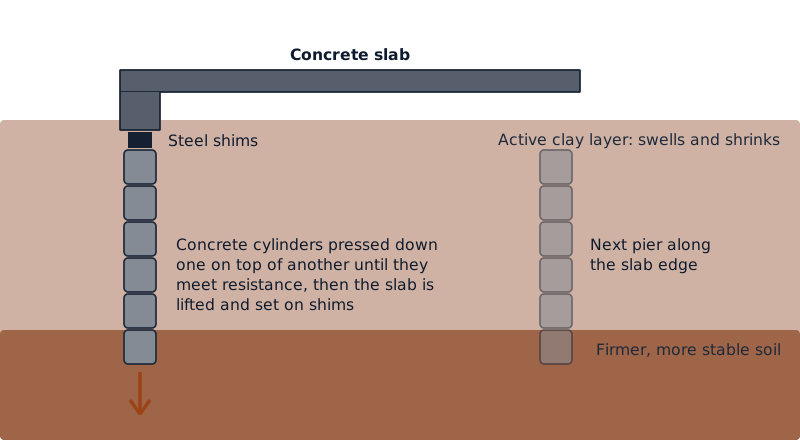
On a Houston slab, the elevation survey is the core of the visit. The contractor walks a level or a digital manometer from room to room and writes down how far each point sits above or below a reference spot. Those numbers show where the house has dropped or heaved, and they decide where piers would go.
They should also look at:
- Doors and windows that stick or have uneven gaps.
- Cracks in brick, drywall and tile floors, and whether they look old or fresh.
- Gutters, downspouts and how the yard slopes near the slab.
- Trees and beds close to the house.
- Signs of a plumbing leak under the slab, such as warm spots or a high water bill.
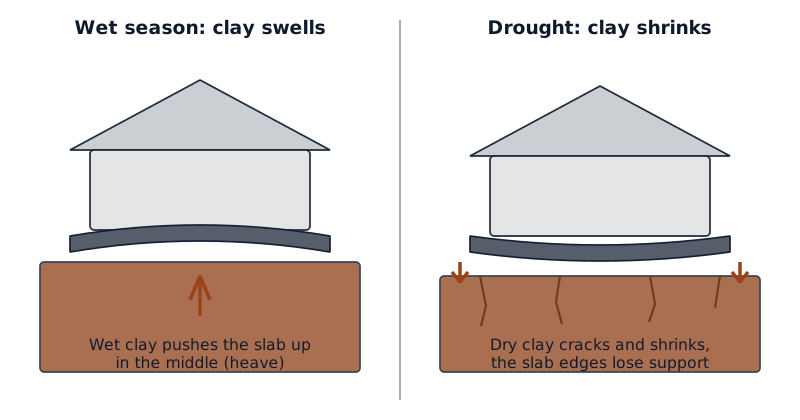
The soil matters here. Much of the area sits on clays such as Lake Charles clay, which the USDA describes as 45 to 60% clay and cracking 1/2 to 2 inches wide when dry. That swelling and shrinking drives most of the movement a contractor is measuring.
Free estimate, inspection or engineer report: which do you need?
You need a free estimate when you already accept the house has a problem and want a price to fix it. You need an independent opinion when you are not sure there is a problem, when two estimates disagree, or when you are buying or selling. A structural engineer report costs about $500 to $1,000 nationally, and it tells you what the house needs without a sale attached.
The three are easy to mix up, so here is how they differ:
| Visit | Who does it | Typical cost | What you get |
|---|---|---|---|
| Free repair estimate | A foundation contractor | Usually no charge | A repair plan and a price |
| Paid foundation inspection | An inspector or contractor | About $300 to $1,000 in Houston | A written condition report |
| Structural engineer report | An engineer | About $500 to $1,000 | An independent diagnosis and repair design |
The inspection figure comes from a Houston guide; the engineer figure from a national one. The full breakdown is on the foundation inspection cost page, and the structural engineer's role page explains when an engineer should design the repair.
What does a written foundation repair estimate look like?
A good written estimate reads like a plan you could hand to someone else. It lists the method, the number and type of piers, a drawing of where each one goes, interior and exterior work shown separately, the permit, cleanup, what happens to your landscaping, and the warranty terms. Each line has a price or is clearly included. If any of these are missing, ask for them in writing before you sign.
Here is what each line should tell you. Use it as a checklist when an estimate arrives.
| Line on the estimate | What it should tell you |
|---|---|
| Elevation survey | The readings or a floor plan with numbers, so you can compare later |
| Repair method | Pressed concrete piers, steel piers, shims, crack injection or other |
| Pier count and location | How many, and a sketch showing where each goes |
| Depth | The target depth, or how depth is decided on the day |
| Interior work | Any slab breakouts inside, and how the floors are put back |
| Permit | Who applies for it and whether its fee is included |
| Plumbing test | Whether a leak test before or after lifting is included |
| Cleanup and yard | Soil removal, backfill and replanting |
| Warranty | Length, what it covers, and whether it transfers when you sell |
| Payment terms | Deposit, stages and when the final payment is due |
Interior piers matter on a slab because they mean cutting through your floors. A Houston guide says interior work adds about 15% to a job, and awkward access adds 6 to 8% to pier costs. An estimate that hides those lines inside one total makes it hard to compare.
Inside the City of Houston, foundation repair runs under a building permit; one weekly city permit report from July 2024 listed 23 foundation repair permits. In Bellaire, residential foundation work needs a $130 floodplain development permit. The estimate should say who pulls the permit. For how prices compare across methods, see the Houston foundation repair cost guide.
How do you get an accurate estimate from a foundation contractor?
You get an accurate estimate by giving the contractor a complete picture and getting the same scope priced by more than one company. Have your history ready, make every room reachable, and ask each contractor to leave their elevation readings.
- Write down the history. When you first saw cracks or sticking doors, and whether they change with the seasons.
- Date your photos. A crack photographed in spring and again in late summer shows movement better than any description.
- Find old paperwork. Past repair records, warranties and any engineer report. A transferable warranty can change the whole job.
- Clear access. Move furniture away from the walls the contractor will want to check, and unlock gates.
- Ask for the readings. Without them, two estimates cannot be compared.
How much do block foundation, bowed wall and carbon fiber strap repairs cost?
Repairs to cinder block or concrete block walls depend on what is wrong. Sealing a crack costs about $250 to $800 nationally. Reinforcing a bowed or bowing wall with steel or carbon fiber strips costs about $4,000 to $12,000 for 12 strips, according to a national 2026 cost guide. If the block cracked because a footing sank, the job is piering, and Houston piers run about $300 to $600 each for concrete.
Bowed walls and carbon fiber straps are mostly a basement repair, and Houston has almost no basements. Here, block walls show up mainly as the short perimeter walls under some older pier-and-beam houses and as retaining walls in the yard. A short block skirt that leans may simply be rebuilt rather than strapped. Ask the contractor to explain why they chose straps, anchors or a rebuild, and to price the option they did not choose.
| Repair | Typical cost | Source |
|---|---|---|
| Crack sealing or injection | $250 to $800 | National guide |
| Wall reinforcement with strips (12 strips) | $4,000 to $12,000 | National guide |
| Pressed concrete pier | $300 to $600 each | Houston guide |
| Steel pier | $1,000 or more each | Houston guide |
| Most Houston foundation jobs | $3,300 to $6,800 | Houston guide |
These are guides, not quotes. For the causes and fixes of block cracks, see cracks in concrete block walls.
How much do polyurethane injection and corner pop repairs cost?
Polyurethane crack injection usually falls in the crack filling range of about $250 to $800, according to a national 2026 guide that groups epoxy, polyurethane and hydraulic cement together. A corner pop, the small chunk that breaks off a slab corner under brick, has no published price we could confirm. It is usually a small patch job, so ask for it as its own line on the estimate.
Polyurethane is flexible, so it suits cracks that let water in. It does not stabilize a slab that is still moving. If the estimate offers injection on a crack that keeps widening, ask what is causing the movement. The trade-offs between resins are covered in epoxy injection for foundation cracks, and patching a corner is covered in fixing cracks in the foundation on the outside.
What are the warning signs in a foundation repair estimate?
Be careful with an estimate that has no elevation readings, a single total with no line items, pressure to sign the same day, or a large deposit before the permit is issued. Be careful too if it recommends piers all the way around a house that only dropped at one corner. A sound estimate explains why each part of the repair is there.
Question a warranty that is only spoken about, and structural repair offered for what looks like a drainage or water problem.
If two estimates disagree badly, pay for an engineer before you choose. A few hundred dollars spent first can save you from paying for the wrong repair.
When you request a foundation repair estimate, we'll arrange a visit from a local foundation contractor. They measure the house, and the price comes to you in writing before any work starts. You decide after that.
Questions people ask
How long does a foundation repair estimate take?
It depends on the size of the house, and a large or two-story house takes longer. The elevation survey takes the most time, because the contractor needs readings from every room. The written estimate may be handed over at the end of the visit or sent a day or two later if the job needs a drawing or a second look.
Do I need to be home for a foundation repair estimate?
Yes, in most cases. The contractor needs to take readings inside the house, check doors and look at interior cracks and floors. Being there also lets you explain the history, point out what you have noticed and ask why they recommend each part of the repair. An outside-only visit can't measure the slab properly.
Is a free estimate the same as a foundation inspection?
No. A free estimate is a sales visit that ends with a repair price. A paid inspection is a written report on the condition of the foundation, which costs about $300 to $1,000 in Houston. If you mainly want to know whether you need repair at all, a paid inspection or an engineer report is the better choice.
Should I get more than one foundation repair estimate?
Yes. Two or three written estimates show you whether the pier count, the method and the price are in line. Ask each contractor to leave their elevation readings so you can compare the measurements, not just the totals. If the plans differ widely, an engineer's report can settle which one fits your house.
What should I ask a contractor during the estimate?
Ask what is causing the movement, why they chose this repair method, how many piers and where, who pulls the permit, how they deal with floors inside, and what the warranty covers in writing. Also ask what happens if they hit something unexpected, such as a plumbing leak, once work starts.
Sources
Last changed