In most cases, no. A standard home warranty in Texas is a residential service contract for appliances and household systems that break down from normal wear, and a foundation is neither. Where a home warranty can help is the plumbing: if a pipe under the slab fails, a contract with plumbing cover may pay for that pipe, even though the slab damage is a separate matter. This page goes past the short answer on our Houston foundation repair home page. It covers how to read your contract, how a home warranty differs from a builder's warranty and from a repair company's warranty, the slab leak overlap, and what you pay when nobody covers it.
Does a home warranty cover foundation repair in Texas?
Rarely. The Texas Real Estate Commission describes home warranties as residential service contracts for the mechanical failure of an appliance or household system through normal wear and tear. Lifting a slab, setting piers or shimming a pier and beam house is structural work on the ground under the house, not a failed system. Unless your contract names the foundation in its covered items, assume it is not included.
The covered list on most contracts reads like a tour of the utility room: the water heater, the air conditioning, the electrical panel, the kitchen appliances, sometimes the pool equipment. TREC lists appliances, plumbing, electrical, pools and water heaters as typical. Some providers sell optional add-ons, and a few may offer limited structural cover, but the wording varies so much that only the contract you hold can answer the question. Look for the words "structural", "foundation", "settling" and "soil movement" in the exclusions section before you look at the covered list.
How is a home warranty different from homeowners insurance for foundation damage?
They cover different kinds of loss. TREC explains that homeowners insurance pays for damage from events such as fire, theft, wind, hail and rain, while a home warranty pays for things that wear out. Neither one is designed to pay for a foundation that moves because the clay under it shrinks and swells, which is the usual cause of foundation trouble in Houston.
That gap matters here more than in most cities. The Lake Charles clay found across much of the Houston area is 45 to 60% clay, according to the USDA soil description, and in dry spells it cracks half an inch to two inches wide and a foot or more deep. That seasonal movement is slow and gradual, so an insurer treats it as wear and settling and a home warranty treats it as outside its systems. Our guide to insurance and foundation repair explains the insurance side, including the exclusions and how a claim is decided.
| What you hold | What it is built to pay for | Foundation movement from soil |
|---|---|---|
| Home warranty (residential service contract) | Appliances and household systems that fail from wear | Usually excluded |
| Homeowners insurance | Sudden losses such as fire, wind, hail, a burst pipe | Usually excluded |
| Builder's warranty on a new home | Defects in how the house was built, for a set term | Possibly, if the defect is structural and within the term |
| A repair contractor's warranty | The piers or work that contractor installed | Only the repaired area, on the contractor's terms |
Can a home warranty pay for a slab leak that damaged the foundation?
It can pay for part of it. If your contract covers plumbing, a leaking water or drain line under a slab may count as a failed household system, so the contract may pay toward finding and fixing the pipe. The foundation damage the water caused is a separate item, and a home warranty will almost always leave that out. Your homeowners policy is the place to look for that half.
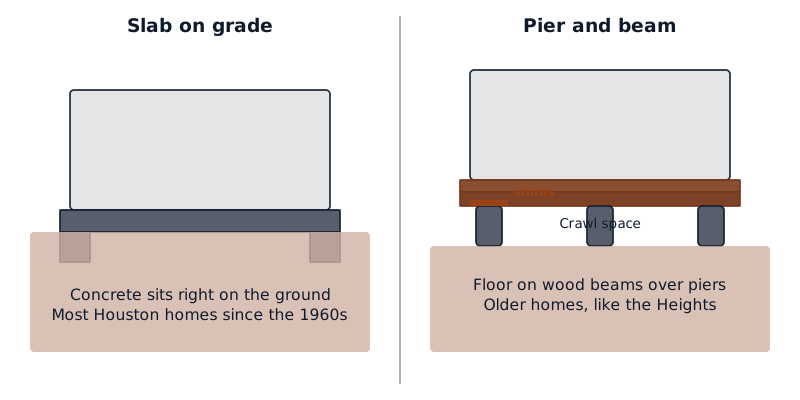
Since the 1960s, Houston builders have mostly poured slabs on grade, and the water and sewer lines of those houses are buried in the soil under the concrete. When a line leaks, the water can soften the clay in one spot and let that part of the slab drop, while the rest stays put. That is why a slab leak and a foundation problem so often arrive together, and why two different contracts may each pay for one piece. Read the plumbing section closely: some contracts exclude lines under the slab, cap what they pay to reach a pipe, or leave out breaking and patching concrete. The signs to watch for are on our page about slab leak symptoms.
Does a new home builder warranty cover foundation problems?
It might, and it is a different document from a home warranty. A builder's warranty on a new house covers defects in how it was built, and it often splits that cover by type, with workmanship covered for a short time and major structural defects covered for longer. If your house is newer and the slab is cracking badly or the floors have dropped, find this paperwork before anything else.
The details depend on the builder and the program behind the warranty, so start with the booklet you got at closing and look for the structural section, its term, and how to make a claim. Most require written notice within the term, and some set out what counts as a structural defect, such as movement that affects how the house carries its loads. Hairline slab cracks and small drywall cracks are often listed as normal. If you are unsure whether your cracks reach that bar, a foundation inspection gives you floor level readings and a written view you can attach to the claim.
Does a foundation repair warranty transfer when you buy a house?
Sometimes. A repair warranty comes from the contractor who did the work, not from a home warranty company, and it covers only the piers or the area they repaired. Whether it passes to you depends on its own terms. Some move to a new owner automatically, while others need a written request, a fee, or notice within a set number of days after closing.
This is the warranty that most often matters for foundations in Houston, because so many houses here have had piers put in at some point. Ask the seller for the original repair contract, the pier layout, and the warranty itself, then read the transfer clause and act on it before the deadline passes. A repair warranty usually lets the contractor come back to adjust the repaired area if it moves again, but it rarely covers new movement in a part of the house that was never repaired. Our guide to buying a house with foundation issues covers the rest of the paperwork to ask for.
How do you check whether your home warranty covers the foundation?
Read three parts of the contract: the covered items, the exclusions, and the limits. Then call the provider and ask a direct question about foundation and under-slab plumbing cover, and ask them to put the answer in writing. A clear written answer before you file saves you a wasted service fee and a long argument later.
- Find the current contract. Home warranties bought at a sale are often renewed every year, and the cover can change at renewal. Use the version for this year.
- Search the exclusions. Look for structural, foundation, settling, soil, slab and pre-existing conditions. Any of these in the exclusions usually settles the question.
- Check the plumbing section. Note whether it covers lines under or inside the slab, whether it pays to reach them, and whether there is a dollar cap.
- Check any add-ons you bought. If you paid for extra cover, read its own terms, because add-ons often have lower caps.
- Check the provider is registered. TDLR took over regulation of Texas home warranty companies from TREC on September 1, 2021, and its licensing database lists registered service contract providers.
- Request a service call in writing if the contract seems to cover what failed, and keep a record of every call and visit.
What does foundation repair cost if no warranty pays?
Most Houston foundation repairs cost $3,300 to $6,800, according to a 2026 Houston Press guide. Concrete piers run about $300 to $600 each and steel piers about $1,000 or more, with interior work adding about 15%. A foundation inspection averages about $600. The real price depends on the repair methods needed and the number of piers, and comes in writing after a visit.
| Item | Typical range | Source |
|---|---|---|
| Most Houston foundation repairs | $3,300 to $6,800 | Houston Press, 2026 |
| Concrete pier, each | $300 to $600 | Houston Press, 2026 |
| Steel pier, each | $1,000 or more | Houston Press, 2026 |
| Foundation inspection | $300 to $1,000, about $600 on average | Houston Press, 2026 |
| Crack filling | $250 to $800 | This Old House, national |
| Building permit | $75 to $150 | This Old House, national |
Inside the City of Houston, foundation repair needs a building permit; the city's weekly permit reports list foundation repair permits every week, including shim and level work on pier and beam houses. Cities outside Houston set their own rules, so check with that city's building department. A repair can stabilize the house, but fixing the water around it matters as much, because the clay keeps moving with the seasons. The foundation repair cost page breaks the numbers down further.
When you send a request through our quote form, we'll arrange a visit from a local foundation contractor. They look at the floors, walls and doors, measure how far the slab or beams have moved, and give you a written price before any work starts. If you plan a warranty or insurance claim, tell them, so the written report covers what an adjuster or provider will ask for.
Questions people ask
Does a home warranty cover cracks in walls or floors?
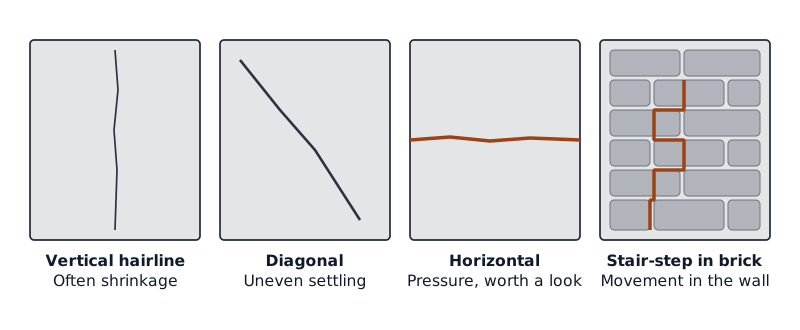
Usually not. Cracks in drywall, brick or a slab floor are a sign of structural movement, and home warranties exclude structural items. A contract might pay to fix a plumbing leak that caused the movement, if plumbing is covered and the leak is in a covered line, but the cracks themselves fall outside it. Hairline cracks are common in Houston houses as the clay dries and wets, and many need watching rather than repair.
Who regulates home warranty companies in Texas?
The Texas Department of Licensing and Regulation. Regulation of home warranties and home service contracts moved there from the Texas Real Estate Commission on September 1, 2021, as part of TDLR's service contract provider program. You can search TDLR's licensing database to see whether a provider is registered, which is worth doing before you buy a contract or argue a claim.
Is a home warranty required when you buy a house in Texas?
No. TREC says a residential service contract is not required to buy a home. Sellers often offer one at closing to reassure buyers, and that contract will mostly cover appliances and systems. If foundation movement is your worry, a pre-purchase inspection and the paperwork from any past repair tell you far more than a home warranty will.
Can a home warranty cancel my contract because of foundation problems?
The answer depends on your contract's cancellation terms, which it must set out. A foundation problem alone is not normally a reason a provider would cancel, because the foundation was never covered in the first place. What a provider can do is refuse a claim where the failure was caused by structural movement or was there before the contract started. Ask for any refusal in writing, with the clause it relies on.
How long does foundation repair take?
A typical slab pier job in Houston often takes a few days on site, and larger jobs with many interior piers can take longer. Mudjacking slurry needs 24 to 72 hours to cure, per the Houston Press guide. The permit, any engineer's report and the contractor's schedule add time before work starts, so ask for a timeline with the written price.
Sources
- Texas Real Estate Commission, Residential Service Companies (Home Warranties)
- Texas Department of Licensing and Regulation, Service Contract Providers FAQ
- Houston Press, guide to foundation repair in Houston (2026)
- This Old House, foundation repair cost guide (October 2026)
- City of Houston, weekly building permit report, July 2024
- USDA NRCS, Lake Charles soil series description
Last changed