You can do part of a foundation repair yourself, but not the part that moves the house. A Houston homeowner can fix the water problems that cause most foundation movement, seal hairline cracks, and keep a record of what is changing. Lifting a slab, adding piers or resetting a pier-and-beam house is structural work: it needs hydraulic equipment, an engineer's eye and, inside the City of Houston, a building permit. This page sorts DIY jobs from professional ones, shows what each costs, and explains the warning signs that mean stop. For the wider picture, start with foundation repair in Houston.
Can you fix a foundation yourself?
You can fix the causes of foundation trouble yourself, and some of the symptoms, but you can't safely fix a foundation that has already moved. Draining water away from the slab, watering the soil evenly in dry spells and sealing small cracks are all homeowner jobs. Raising a sunken corner back to level is not. That takes piers driven to firm soil and a controlled lift, which is a contractor's job.
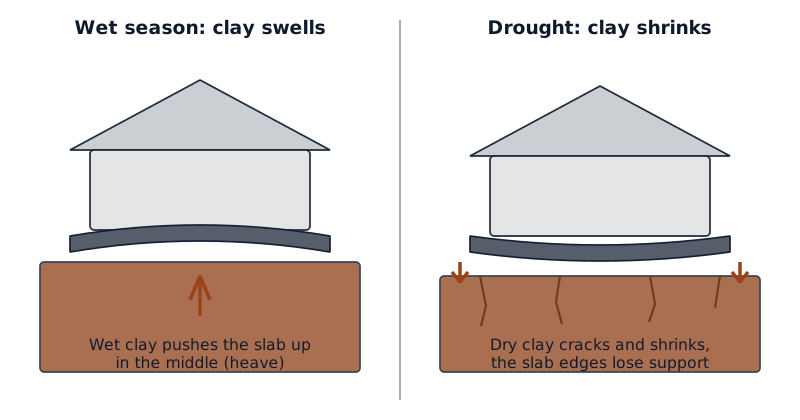
The reason is Houston's ground. Much of the area sits on clays such as the Lake Charles series, which the USDA describes as 45 to 60% clay. When it dries, it cracks open half an inch to two inches wide and a foot or more deep, then swells when rain returns. That cycle pushes and drops a slab unevenly. DIY work that controls moisture slows the cycle. It can't undo movement that has already happened.
Which foundation problems can a homeowner fix?
The problems a homeowner can fix are the ones around the house rather than under it: water pooling near the slab, gutters spilling at the corners, soil sloping toward the walls, dry soil pulling away from the beam, and fine cracks that are only cosmetic. These jobs need basic tools and a weekend, and they are what keeps a small problem from becoming a structural one.
A short list of sensible DIY jobs:
- Downspouts and gutters. Clear them and extend each downspout so water lands several feet from the slab.
- Grading. Build up soil so the ground slopes away from the house, not toward it.
- Watering the foundation. In long dry spells, an even soaker line keeps the clay from shrinking away. The setup is on soaker hose for foundation.
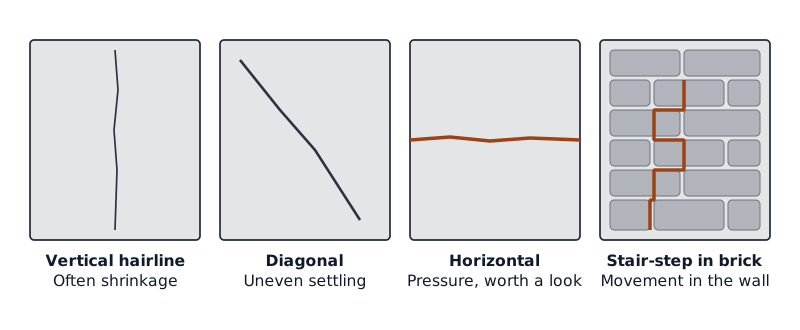
- Sealing hairline cracks. Thin, stable cracks in a slab edge or in drywall can be filled with a store-bought crack filler. Sealing hides the crack; it does not stop movement.
- Tracking cracks. Mark each end of a crack with a pencil and the date. If it grows past the mark over a few months, the house is still moving.
Larger drainage work, such as a buried drain line, is covered on foundation drainage.
How do you fix foundation problems yourself, step by step?
Start by working out whether the house is moving, then fix water first and cracks last. Walk the outside after heavy rain and see where water sits. Check doors and windows for sticking, floors for slope and walls for new cracks. Sort the drainage, then water evenly through summer, then seal and mark any small cracks. If the signs keep growing, you have a structural problem, not a DIY one.
In order:
- Look and record. Photograph every crack with a ruler beside it. Note which doors are sticking and when.
- Check the floors. A marble or a long level shows which way a floor runs downhill. A slope that follows one side of the house points to settlement there.
- Fix the water. Downspouts, grading, then even watering in drought.
- Seal small cracks. Only the hairline ones that haven't grown since you marked them.
- Wait and watch. Give it a full season. Houston clay moves with the weather, so a crack that opens in August and closes in winter tells you a lot.
If you're unsure what a crack's shape means, the guide to vertical vs horizontal foundation cracks sorts the harmless ones from the serious ones.
Do DIY carbon fiber straps work on a Houston foundation?
Carbon fiber straps are typically sold for bowing basement walls and block retaining walls that are being pushed inward by soil. Most Houston houses don't have that problem, because they sit on a concrete slab or on piers and beams with a crawl space, and basements are rare here. A strap kit won't lift a sinking slab or stop a corner from dropping, which is the usual Houston failure.
The same goes for most cinder block repair kits and bowed wall kits. They suit a block wall that is leaning, not a house that is settling. If you do have a block retaining wall or skirting that has cracked, the crack may well be a sign the house above it has moved, so look at the floors and walls inside before you buy a kit. For a pier-and-beam home, the right starting point is pier and beam foundation repair, where shimming and resetting piers is explained.
Do you need a permit for foundation repair in Houston?
Yes, for structural work inside the City of Houston. The city's weekly permit reports list foundation repair building permits, including residential "shim and level" jobs on block and base foundations, so even resetting a pier-and-beam house runs under a permit. Drainage, watering and sealing hairline cracks are not foundation repair in that sense. Other cities set their own rules and fees.
Bellaire, for example, charges a flat $130 floodplain development permit for residential foundation work in its 2026 fee schedule. Suburbs such as Bellaire and Katy each have their own building departments, so check with yours before any lifting or piering. Work done without a permit can cause trouble when you sell, because a buyer's inspector may ask for the paperwork.
How much does DIY foundation repair save?
DIY saves the most on the small jobs and almost nothing on the big ones. Sealing a hairline crack yourself costs a tube of filler, while a professional crack repair runs $250 to $800 nationally. But This Old House warns that a crack left untreated can grow into a $10,000 to $15,000 repair. Structural work has no real DIY version, so the saving there is zero.
| Job | DIY? | Professional cost guide |
|---|---|---|
| Hairline crack sealing | Yes | $250 to $800 (national) |
| Foundation inspection | No, but cheap | $300 to $1,000 (Houston) |
| Structural engineer report | No | $500 to $1,000 (national) |
| Mudjacking or slabjacking | Not advised | $550 to $1,300 (national) |
| Pressed concrete pier, each | No | $300 to $600 (Houston) |
| Steel pier, each | No | $1,000 and up (Houston) |
| Typical Houston repair job | No | $3,300 to $6,800 (Houston) |
These figures come from a 2026 Houston guide and a national cost guide updated in October 2026. They are a guide only; a contractor's written quote sets the real price. More detail is on foundation repair cost in Houston and foundation crack repair cost.
There is also a hidden cost to DIY structural work: the warranty. Professional piering often comes with written terms on the work, and some transfer to a new owner. A homemade repair comes with none, and a buyer's inspector will notice it.
When should you stop and call a foundation contractor?
Stop doing it yourself when the signs point to movement rather than surface wear. Cracks wider than a pencil line, cracks that keep growing past your marks, stair-step cracks in brick, doors that jam in every season, floors you can feel slope, and gaps between walls and the ceiling all mean the foundation is moving. At that point a professional inspection costs less than guessing.
Other clear signs:
- Water coming up through the slab after rain, or a hot spot on a tile floor, which can point to a slab leak.
- Cracks that run horizontally across a wall.
- A corner of the house sitting visibly lower than the rest.
- Brick pulling away from window frames.
A foundation inspection tells you which repair methods fit the house, whether that's piers, leveling or just drainage. When you request a visit, have your crack photos and dates ready; they help the contractor see the pattern of movement. We'll arrange a visit from a local foundation contractor, and you get the price in writing before any work starts. Request a foundation quote.
Questions people ask
How long does DIY foundation repair take?
Most DIY foundation jobs take a day or a weekend. Extending downspouts and regrading soil can be done in a few hours to two days, and sealing a hairline crack takes an afternoon plus curing time. The real time cost is watching: you need a full season of marked cracks and notes to know whether your fixes have stabilized the house or whether it is still moving.
Can you level a house with jacks yourself?
It's possible on paper but risky in practice. Lifting a slab or a pier-and-beam frame unevenly can crack the concrete, split drywall and break plumbing lines under the house. In the City of Houston, shim and level work appears on building permits, so it is treated as structural. Hire a contractor who can stabilize the house on piers and lift it in stages.
What can you buy at a home improvement store for foundation repair?
Stores sell crack fillers, epoxy kits, concrete patch, soaker hoses, downspout extensions and adjustable support posts. Those suit drainage, watering, cosmetic cracks and small structures such as decks and sheds. They don't include anything that can lift or underpin a house. For epoxy specifically, the limits are covered on foundation crack repair.
Does a DIY repair affect selling your house?
It can. A buyer's inspector will look for patched cracks, shims and signs of past movement. A documented professional repair with a permit, an engineer's report and transferable warranty terms usually reassures buyers. An undocumented DIY fix tends to raise questions, and it may lower offers or lead to a repair request in the contract.
Will watering the foundation fix foundation problems?
No, watering prevents problems rather than fixing them. Keeping the clay around the slab evenly moist in dry spells reduces shrinking and the movement that comes with it. It won't raise a section that has already dropped. If cracks keep growing after a summer of steady watering and good drainage, the house likely needs foundation leveling on piers.
Sources
Last changed